
Hidden Palms, Palm Desert CA | Homes For Sale
Hidden Palms appeals to buyers who want central Palm Desert convenience, a greener resort-like setting, and a condo community that often feels more like a neighborhood of small patio homes than a typical attached development. The appeal here is not golf membership, brand-new construction, or a status-driven club identity. It is mature landscaping, water features, private patios, interior walking paths, and a location near El Paseo that keeps shopping, dining, and daily errands close. Some buyers come for the simpler two-bedroom layouts, some for the larger three-bedroom plans, and many simply like that Hidden Palms offers a softer and more residential-feeling Palm Desert experience than people expect from a centrally located condo HOA.
Real Estate Profile
The MLS history here is heavily weighted toward condo ownership, but Hidden Palms is not a single-layout neighborhood. Across the uploaded resale history, three-bedroom homes make up the core of the community, two-bedroom plans form the other major segment, and a much smaller number of four-bedroom homes appear at the upper end of the plan spread. The most common footprints cluster around roughly 1,345, 1,543, 1,584, and 1,728 square feet, which gives buyers more real choice than the community sometimes gets credit for. Simpler two-bedroom homes tend to live in the mid-1300s, while much of the three-bedroom inventory steps into the mid-1500s and low-1700s.
Build dates are overwhelmingly centered in the late 1970s and 1980, so buyers are usually not choosing among different construction eras as much as choosing among renovation quality, patio privacy, atrium usefulness, natural light, garage function, and exact placement within the community. In Hidden Palms, the real difference is rarely age alone. It is whether a particular home has been updated intelligently and whether its location gives it more openness, better water or greenbelt orientation, and a stronger day-to-day feel.
Outdoor Living, Water Features, and Community Feel
Hidden Palms is a good example of how outdoor value in Palm Desert is not always about dramatic elevation or oversized lots. This is a flatter, more internal, more landscape-driven community. Much of the appeal comes from greenbelts, lakes and water features, mature trees, interior walking paths, and patios or courtyards that make the homes live larger than their square footage might suggest. Some homes pick up mountain glimpses, some enjoy lake or greenbelt exposure, and others win on quiet internal positioning and privacy.
That creates real separation inside the neighborhood. The better locations are often the ones that feel tucked away without feeling closed in, get strong natural light, and avoid too much exposure to drives, guest parking, or neighboring walls. In Hidden Palms, a better patio, a more private courtyard, or a lake- or greenbelt-facing position can materially change how condo living feels every day.
What Buyers Usually Love About the Homes
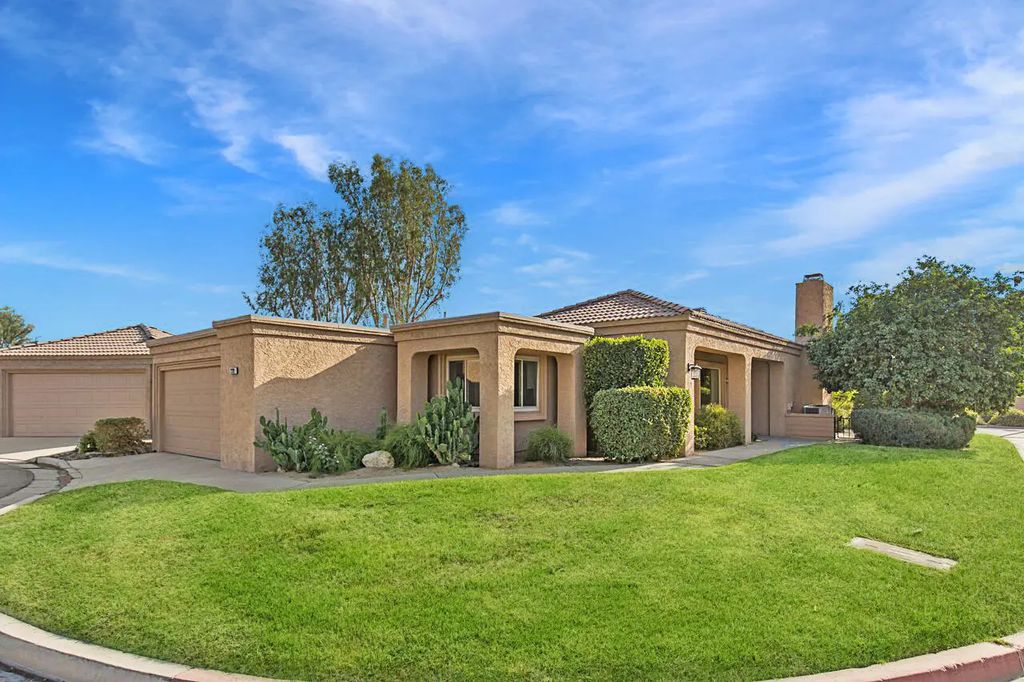
One reason buyers keep returning to Hidden Palms is that the homes often feel more house-like than expected. Two-car garages, enclosed front courtyards, interior atriums, back patios, and practical single-level-feeling layouts show up repeatedly in the MLS history. For many buyers, that is the sweet spot: less upkeep than a detached non-HOA house, but more privacy, better outdoor use, and more flexibility than a basic condo box.
Another advantage is range. Buyers can start with a smaller two-bedroom layout, move into a more generous three-bedroom plan, or hunt for a property whose location makes it feel almost detached in daily use. Hidden Palms works for full-time residents, seasonal owners, downsizers, and lock-and-leave buyers because the community gives them multiple ways to solve the same lifestyle problem: how to stay central, comfortable, and low-maintenance without feeling cramped or generic.
HOA and Community Setup
Hidden Palms is very much an HOA ownership experience, and buyers should treat that as part of the value proposition rather than an afterthought. What people are really buying here is not just the square footage inside the walls. They are also buying managed grounds, shared recreational amenities, coordinated exterior standards, gated entry, and a more maintained common environment than they would find in many non-HOA Palm Desert neighborhoods. For the right buyer, that is a feature.
It also means due diligence matters. Buyers should look closely at the current monthly dues, reserve strength, master insurance structure, exterior responsibility, pet rules, guest parking, and rental restrictions before closing. Hidden Palms is one of those communities where old neighborhood averages are less useful than exact current numbers. In the uploaded MLS history, HOA dues move materially over time, so the smart move is always to verify the current dues and exactly what they cover on the specific property.
Amenities and Location Inside the Community
Hidden Palms is not a golf-first community. Its lifestyle identity is built more around greenery, water, recreation, and central convenience. Buyers are typically drawn to the pools and spas, tennis and pickleball, lake and pond features, and the interior paths that help the neighborhood feel softer and more resort-like than many centrally located condo developments. The location is another major part of the appeal. Hidden Palms sits in a strong central Palm Desert position that keeps El Paseo, dining, entertainment, and everyday shopping close without placing owners in the middle of constant traffic or commercial noise.
That balance is a big reason the community continues to attract a broad buyer pool. Owners can enjoy a more insulated residential setting, then be out to dinner, errands, or an event quickly. For buyers who care about being near the heart of Palm Desert rather than tucked into a club setting or pushed far into newer tracts, Hidden Palms occupies a very useful middle ground.
Who Hidden Palms Fits Best
Hidden Palms tends to work especially well for buyers who want central Palm Desert location, a greener established setting, and a more maintained condo lifestyle without paying for a country club identity. It is a strong option for full-time residents, seasonal owners, retirees, downsizers, and buyers who want the convenience of Palm Desert without sacrificing patio space, garages, or a more residential feel.
It also fits buyers who value usability over flash. Some want an easy lock-and-leave second home. Some want a three-bedroom plan that can handle guests and office space. Some want a two-bedroom home in a community that still feels lush and relaxed. Others simply want an older Palm Desert neighborhood where the best properties still feel special because of their patios, atriums, greenery, and internal positioning. Hidden Palms can support all of those goals.
What to Pay Attention to Before Buying
Because Hidden Palms is an older condo community, due diligence here is less about the neighborhood name itself and more about the exact property. Buyers should look closely at the floor plan, whether the home feels more attached or more detached in practice, the patio and courtyard usefulness, atrium condition, lake or greenbelt orientation, privacy, garage storage, HVAC age, window and slider condition, and how the home relates to pools, roads, guest parking, and neighboring buildings. Inside this community, location within the community matters a lot.
It is also worth looking hard at finish level and competitive positioning. Since much of the housing stock comes from the same general era, pricing is often driven by renovation quality, kitchen and bath execution, flooring, lighting, ceiling finish, and how thoroughly the seller addressed the aging points that matter in late-1970s and 1980 desert construction. Buyers should also read the HOA documents carefully so they understand dues, reserves, insurance responsibility, amenity access, and rules before closing. Hidden Palms can offer excellent central Palm Desert value, but the best buys are usually the ones where floor plan, condition, patio privacy, and monthly carrying cost all line up well.
FAQ
Is Hidden Palms a private country club?
No. Hidden Palms is a gated condo HOA community, not a golf membership or private country club environment.
What types of homes are in Hidden Palms?
The resale history is dominated by condo ownership with a strong mix of two- and three-bedroom homes, plus a much smaller number of four-bedroom layouts.
When were the homes built?
Most of the MLS history points to a build period centered in the late 1970s and 1980.
Are the homes mostly single story?
Many homes live in a very comfortable one-level style, but floor-plan details still matter. Buyers should look carefully at the exact layout, entry sequence, and how the interior spaces connect.
Do the homes feel attached or detached?
Hidden Palms is a condo community, but some homes feel far more house-like than buyers expect because of the patios, courtyards, atriums, garages, and the spacing created by landscaping and internal positioning.
Is Hidden Palms gated?
Yes. Hidden Palms is best understood as a gated Palm Desert condo community rather than an open neighborhood.
Does Hidden Palms have an HOA?
Yes. Buyers should verify the current monthly dues, reserve position, insurance structure, and exactly what the HOA covers on the specific property.
What amenities does Hidden Palms offer?
The community is generally known for pools and spas, tennis, pickleball, lake and water features, walking paths, and landscaped common areas. Buyers should still verify the exact current amenity setup and access rules with the HOA.
Is Hidden Palms good for full-time living or seasonal use?
It works well for both. The community attracts full-time residents, seasonal owners, downsizers, and lock-and-leave buyers.
What should buyers watch most carefully before purchasing?
The biggest issues are usually the exact floor plan, patio and courtyard usability, atrium condition, view line, privacy, garage function, update level, HOA dues, insurance structure, and how the home is positioned inside the community.