
Marrakesh Country Club, Palm Desert CA | Homes For Sale
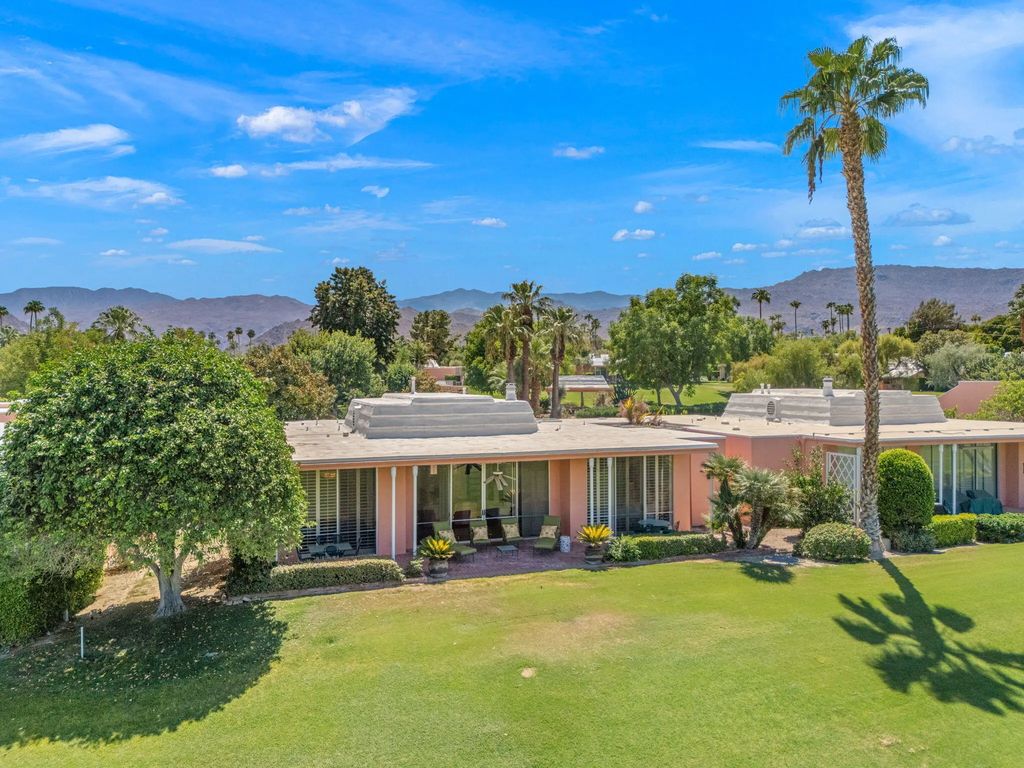
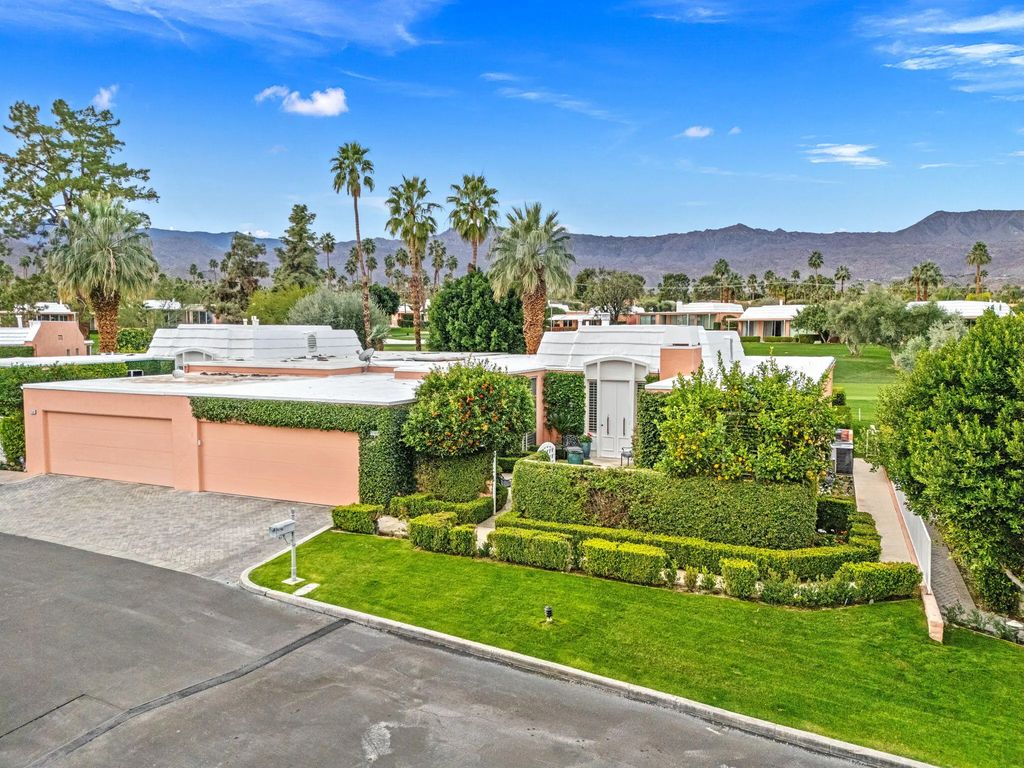
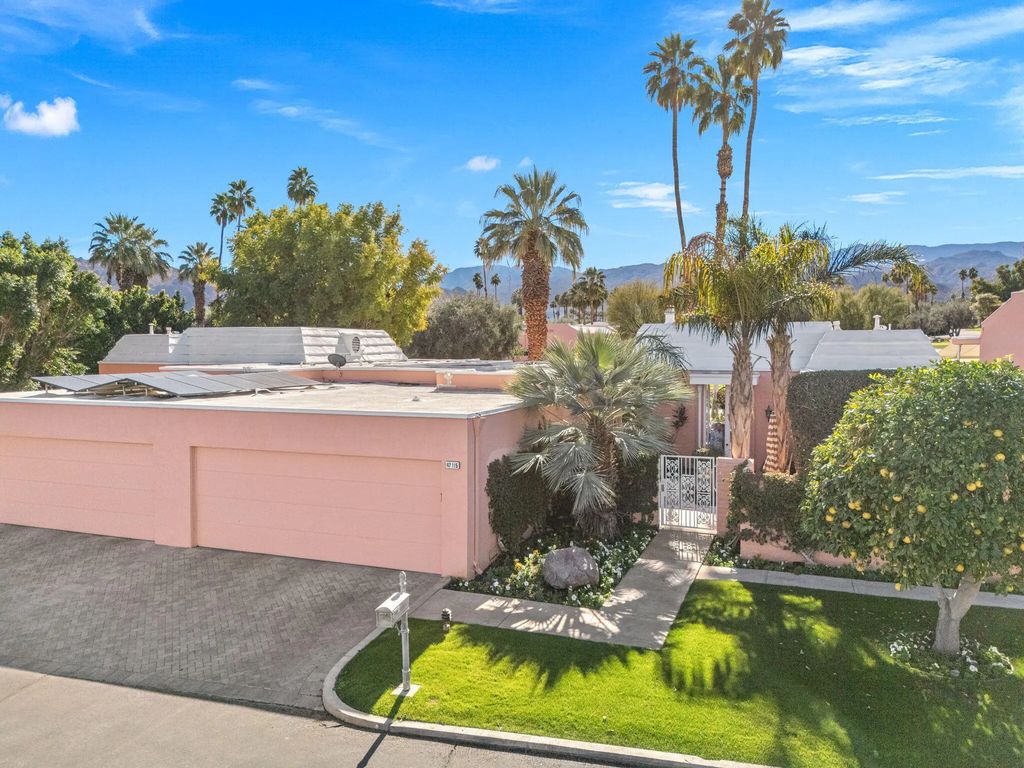
Marrakesh Country Club is one of the clearest examples in Palm Desert of real estate behaving as architecture, lifestyle, and private-club culture all at once. Developed under Johnny Dawson and designed around John Elgin Woolf’s Hollywood Regency vocabulary, Marrakesh is not just a gated golf address. It is a tightly composed 155-acre community of 364 homes with 14 pools, spas, and pavilions, centered around a private member-owned club and a design identity strong enough that the club itself presents Marrakesh as a living landmark. That is the right lens for buyers: here, the purchase is not only about square footage or golf frontage, but about buying into one of the desert’s most architecturally distinct residential environments.
- All Listings
- $900,000 - $1,000,000
- Over $1,000,000




HOA / Neighborhood Breakdown
Marrakesh does not really break into separately branded resale neighborhoods the way some other desert clubs do. It is better understood through a handful of internal market lanes:
-
The plan lane: Marrakesh resale is more plan-driven than many buyers first assume. Official club materials still reference named architectural plans, and our MLS data repeatedly circles around B, C, and D plan language, plus extended or modified versions. That makes plan recognition part of the buying skill set here.
- The golf-frontage lane: A large share of the resale language in the MLS export turns on golf-course relationship rather than on separate neighborhood identity. In Marrakesh, fairway exposure, double-fairway openness, greenbelt depth, and the way a terrace sits against the course all matter materially.
- The pool-and-pavilion lane: The community was conceived with 14 pools, spas, and pavilions, and older resident accounts describe social life organizing around those shared clusters. Buyers who care about walkability to a social node should think about that proximity, not just the house itself.
-
The privacy lane: End-unit feel, corner positioning, cul-de-sac placement, and how enclosed or open the courtyard reads can all separate one otherwise similar villa from another. In our MLS export, privacy features show up often enough to treat them as real value drivers rather than minor bonuses.
-
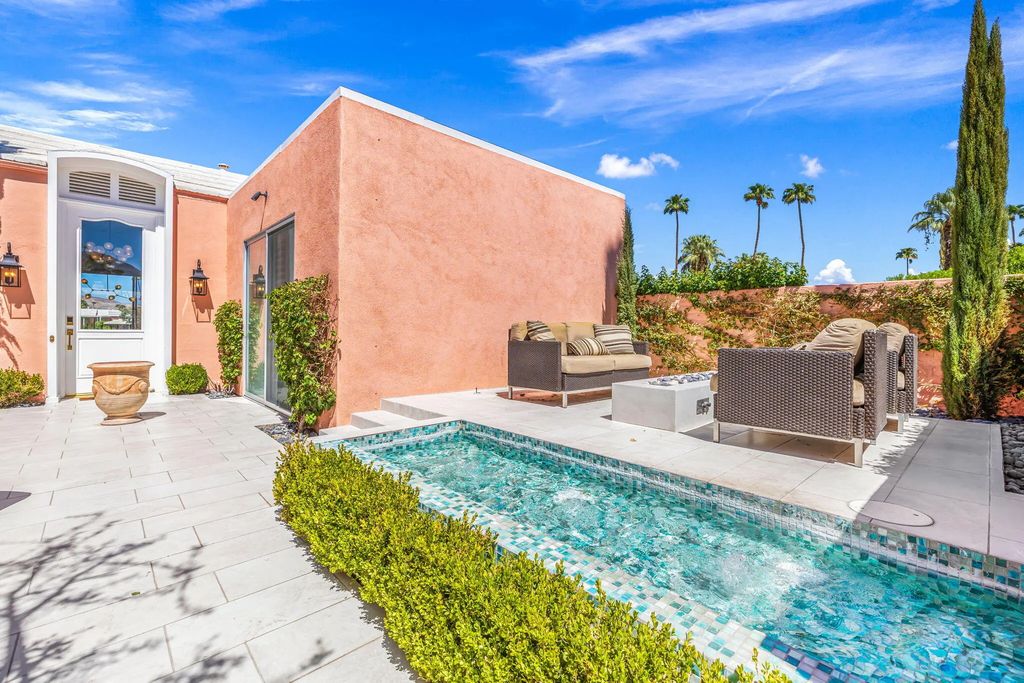
The outlier lane: Marrakesh does have a small slice of detached or heavily reimagined homes, along with the occasional private-pool outlier. But that is not the core identity of the market. The core identity is still the attached or paired Hollywood Regency villa done well.
Real Estate
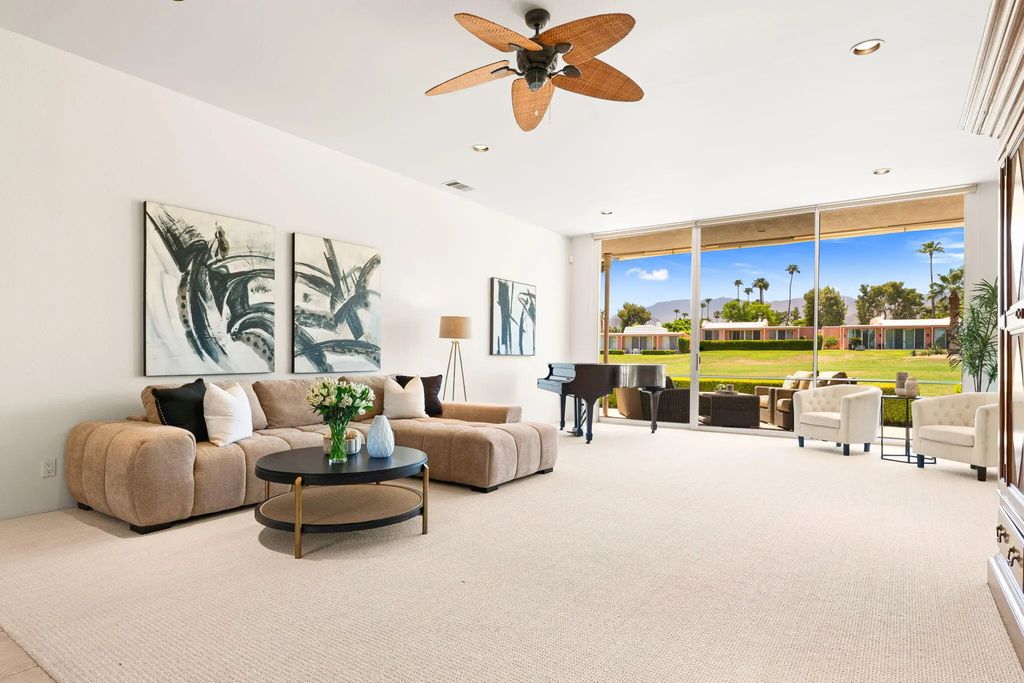
Across our reviewed MLS data, Marrakesh is highly coherent in age and aesthetic language, but not flat in value. The market is dominated by 2- and 3-bedroom residences, usually in the 2- or 3-bath range, and mostly within a disciplined size band. That consistency means buyers are not underwriting “newer versus older” the way they would in a more mixed community. They are underwriting plan, sight line, finish level, and whether a renovation improves the Woolf composition or fights it. Official club plan materials reinforce that plan-driven logic, and our MLS history makes clear that the premium lane increasingly belongs to homes that preserve the drama of the original architecture while upgrading kitchens, baths, glazing, lighting, and indoor-outdoor flow for current living.
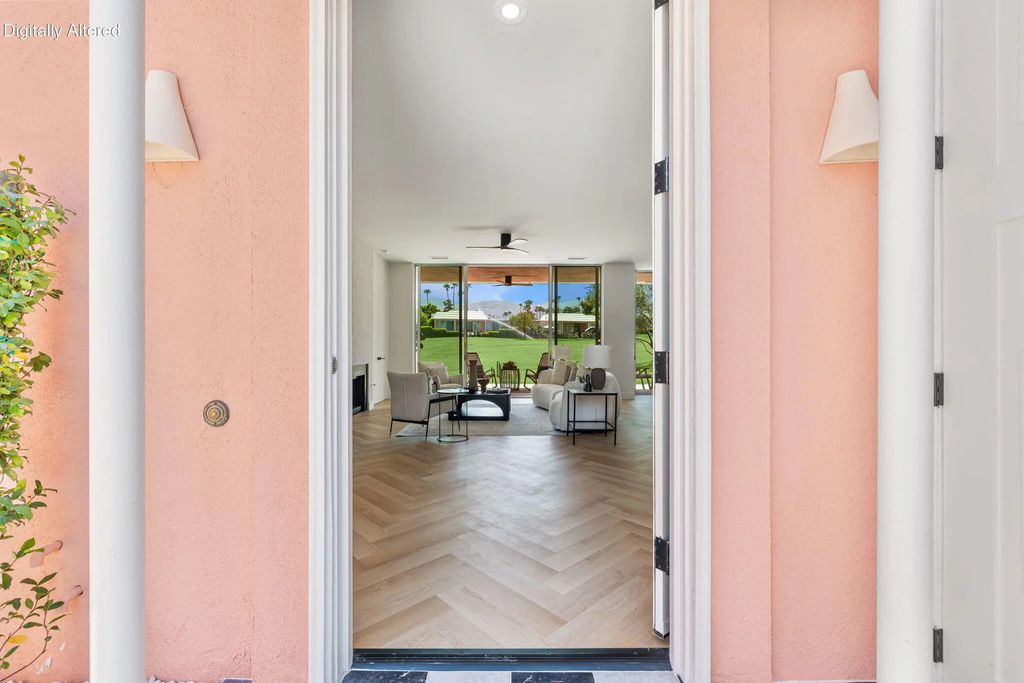
The important nuance is that the top of the market here is not defined only by detached product. Your MLS export shows that premium pricing can sit inside attached villas too, especially when the home gets the fundamentals right: strong golf orientation, mountain backdrop, corner or end-unit privacy, a memorable courtyard arrival, and a renovation that understands why buyers came to Marrakesh in the first place. This is not a generic attached-home market. It is a design-premium market hiding inside a largely attached-home framework.
History
Marrakesh deserves a history section because its history is not decorative. It is central to how the community is valued. Official club history traces the beginning to legendary developer Johnny Dawson, who assembled John Elgin Woolf, Richard Harrison, and Ted Robinson to create a singular desert club. Palm Springs Life’s reporting adds the key real-estate context: Dawson leased the site in 1968, Woolf shaped the residential vision, Ted Robinson designed the executive course, and Richard Harrison completed the clubhouse after Woolf could not finish the working drawings. The first families moved in during December 1969. More recently, Palm Desert formally moved forward with historic-district designation for Marrakesh in 2025, which reinforces that this is not just a stylish community but a preservation-worthy one.
That pedigree matters because Marrakesh is one of the rare desert clubs where the built environment itself is part of the membership proposition. The club’s own architecture materials describe it as the only colony of Hollywood Regency houses in the world, and regional architectural sources consistently highlight the signature vocabulary that buyers still respond to today: pink walls, Pullman entries, mansard roofs, walled courtyards, and broad glass exposure. Whether a buyer comes for golf, design, or both, the story is inseparable from the resale identity.
Lifestyle
Lifestyle at Marrakesh is broader than golf and more curated than a simple amenity checklist. Official club materials emphasize a socially active culture with dining, weekly gatherings, recreational programming, and intellectual life, alongside golf, tennis, pickleball, bocce, croquet, yoga, water aerobics, hiking, bicycling, bridge, book club, art classes, culinary events, wine tastings, and a speaker series. The club also describes the community as active, vibrant, close-knit, and notably architecture- and culture-aware, which fits the type of buyer Marrakesh tends to attract.
In practical terms, Marrakesh fits buyers who want a private-club environment without giving up personality. The social tone here is not “country club” in the stiff, generic sense. It is more design-conscious, more visually tuned, and more community-forward. That makes Marrakesh especially strong for households who want the club to matter on non-golf days too.
Golf
Golf at Marrakesh is important, but the value proposition is different from a desert championship-course arms race. The club positions its course as one of the country’s finest executive 18-hole experiences, designed by Ted Robinson and supported by year-round golf programs, tournaments, PGA-led instruction, a simulator room, putting greens, and a dedicated practice area. That creates a more playable, repeatable golf culture than buyers sometimes find in longer, more intimidating clubs.
For real estate, that matters because the course is woven deeply into how the homes live. Golf frontage, open fairway depth, lake or greenbelt interruption, and mountain framing all affect the feel of a residence. Marrakesh’s course is not just scenery. It is one of the core organizing elements of the community.
Membership and Clubhouse
Membership at Marrakesh should be treated as part of the home-buying conversation from the beginning. The club states that full resident membership is associated with residential ownership, and that membership application is part of becoming a resident. It also states that non-resident memberships are sponsorship-based and that seasonal tenant memberships are available in conjunction with a homeowner’s membership. In other words, ownership and club life are tightly linked here.
The clubhouse is also a central part of the value story, not an afterthought. Official club materials describe a renovated clubhouse shaped with Tom Scheerer’s influence, with dining rooms, terrace space, social lounges, a redesigned fitness center, and mountain-and-golf views. Marrakesh is not selling only homes around a course. It is selling a club-and-culture proposition anchored by a clubhouse that has real visual and social importance.
Location
One of Marrakesh’s quieter strengths is where it sits inside Palm Desert. Official club materials place it off Highway 111, south of Portola, minutes by car or golf cart from El Paseo, The Living Desert Zoo, and popular hiking trails, while still being framed by the Santa Rosa and San Jacinto mountains. That combination is powerful: the community feels enclosed, aesthetic, and private, but it does not feel stranded.
For buyers, that creates a very specific advantage. Marrakesh offers a highly controlled internal visual world, but with fast access to the outside Palm Desert lifestyle. That is one reason the community works so well for full-time residents as well as second-home owners.
Analogy For Understanding
Buying in Marrakesh Country Club is less like buying into a generic desert country club and more like buying into a preserved design language that still functions as a living private club. Some communities train buyers to compare amenity counts. Marrakesh trains them to compare plan lineage, courtyard drama, golf orientation, mountain line, privacy, and renovation intelligence. The premium is not only that the homes are attractive. The premium is that the community was conceived as one coherent aesthetic world, and it still largely reads that way today.
FAQ
What kind of community is Marrakesh Country Club?
Marrakesh is a private, member-owned golf club community in Palm Desert built around a unified Hollywood Regency design identity rather than a mix of unrelated housing types. Official club materials describe it as a 155-acre community with 364 homes, 14 pools, spas, and pavilions.
Is Marrakesh more of a plan market or a custom market?
More of a plan-and-position market. Official materials still reference named plan families, and your uploaded MLS export repeatedly shows buyers and agents thinking in terms of plans, modified plans, frontage, and renovation quality rather than in terms of broad custom-home variety.
Are homes here mostly attached or mostly detached?
Mostly attached or paired in feel. Your MLS export shows detached outliers, but the dominant resale identity is the attached Hollywood Regency villa, with detached-style pricing achieved more through lot quality and renovation than through detachment alone.
Why does history matter so much here?
Because the history is part of the value proposition. Johnny Dawson, John Elgin Woolf, Richard Harrison, and Ted Robinson are not side notes here; they are part of why Marrakesh reads differently from other Palm Desert clubs. Palm Desert’s 2025 historic-district action reinforces that significance.
What tends to separate one Marrakesh resale from another?
In your MLS export, the clearest separators are plan family, golf or greenbelt relationship, mountain framing, courtyard quality, end-unit or corner privacy, clubhouse or pool-cluster proximity, and whether the renovation respects the original architecture.
Does buying a home here solve membership automatically?
Resident membership is closely tied to ownership, and the club says membership application is part of becoming a resident. Buyers should still verify current procedures, categories, and timing directly with the club during due diligence.
Who is Marrakesh best for?
Marrakesh is especially strong for buyers who care about architecture, coherent design identity, active club life, and a south Palm Desert location close to El Paseo. It fits people who want more than a golf address; it fits people who want a point of view.