
Panorama, Cathedral City CA | Homes For Sale
Panorama appeals to buyers who want a more traditional desert neighborhood with more lot utility, more private-yard potential, and fewer monthly ownership layers than they usually find in condo-heavy or amenity-first communities. The appeal here is not golf, gate prestige, or a lifestyle package built around dues. It is detached housing, practical square footage, private pool potential, and a north Cathedral City location that works well for people who want everyday access around the valley.
Some buyers come to Panorama because they want a single-family home without shared-wall compromises. Some want more house for the money than they are finding in Palm Springs or in gated communities with heavier carrying costs. Others simply like that Panorama feels established, lived-in, and functional. This is a neighborhood where buyers often get more driveway, more yard, and more day-to-day usability than they first expect.


Real Estate Profile
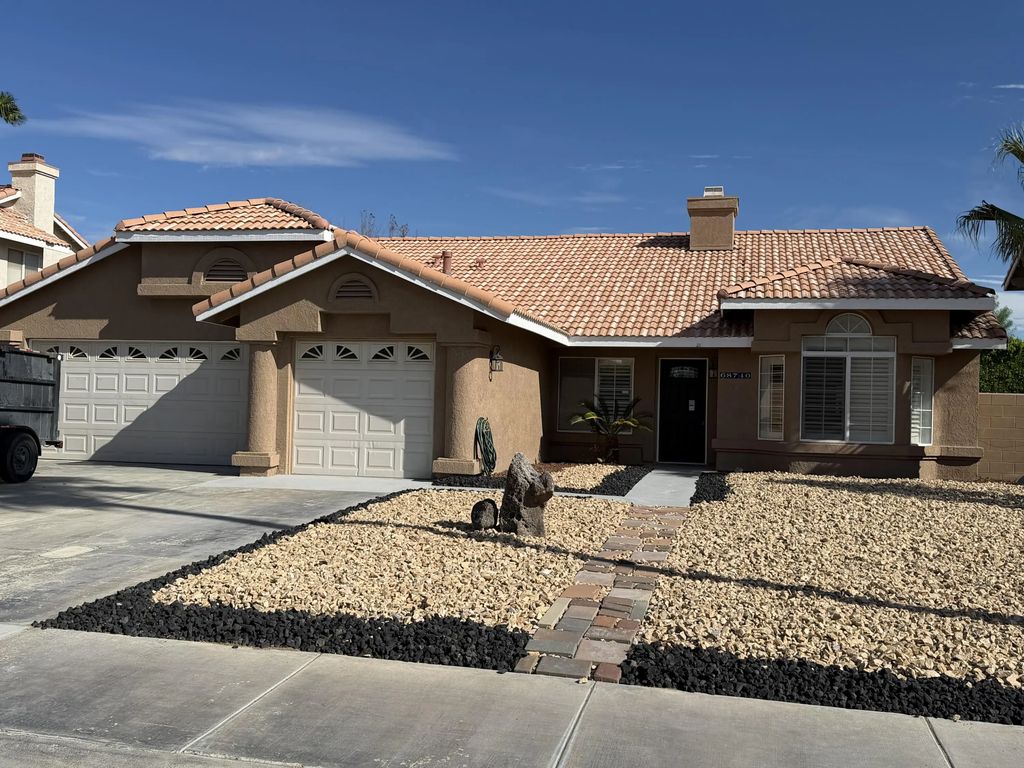
The MLS history here is overwhelmingly detached rather than attached product, and Panorama is much more of a three- and four-bedroom neighborhood than a small-home enclave. Across the resale history, the broad size range stretches from more compact homes in the 800-square-foot range up into properties that exceed 4,000 square feet, but the heart of the market lives much closer to the mid-1,500s through the low-2,200s. Lot size also matters here. Many homes sit on parcels in the upper-7,000s to low-8,000s square feet, which gives Panorama a more open and usable feel than tighter desert neighborhoods built around shared amenities or smaller lots.
Build dates shape the ownership experience too. Panorama is not a midcentury neighborhood, and it is not primarily brand-new construction either. The resale history leans heavily toward homes built from the late 1980s into the early 2000s. That matters because buyer decisions here are usually less about whether the neighborhood itself works and more about condition, updating, pool quality, roof and systems age, floor-plan efficiency, and how well a specific home has been maintained relative to competing resale options nearby.
Outdoor Living, Pools, and Neighborhood Feel
One of Panorama’s biggest advantages is that outdoor value here is usually private rather than shared. This is not the kind of neighborhood where buyers are trading yard space for a community clubhouse. Many homes have enough lot depth to support meaningful patios, lawn, pool space, side-yard flexibility, or simply a stronger sense of separation from the next house. Private pools are common enough in Panorama that they shape buyer expectations, but not so universal that homes without them automatically lose relevance. The bigger question is how well the outdoor setup works.
That creates real value differences inside the neighborhood. Homes with clean backyard layouts, mature landscaping, usable shade, better mountain views, and a stronger sense of privacy usually separate themselves from more basic offerings. Interior positioning, corner-lot exposure, adjacency to busier roads, and overall streetscape feel matter here in a practical way. In Panorama, buyers often reward the homes that feel comfortable and easy to live in more than the ones that simply have the biggest square footage on paper.
What Buyers Usually Love About the Homes
Panorama tends to attract buyers who want functional livability more than curated lifestyle branding. One of the recurring strengths in the neighborhood is usable square footage. Many of the homes offer room for full-time living, multigenerational setups, work-from-home needs, guests, or hobby space without forcing buyers into a much higher price tier elsewhere in the valley. Single-story living is also a meaningful part of the appeal here, even though there are two-story homes in the mix.
Another advantage is range. Some homes are simpler and more affordable entry points. Others push larger, offer three-car garage utility, private pools, bigger entertaining areas, or updated interiors that move them into a stronger move-up category. That range matters because buyers can often stay within the same overall neighborhood identity while changing size, finish level, and outdoor setup.
HOA and Ownership Experience
Panorama is attractive in large part because it is not defined by a heavy HOA structure. The ownership experience here is usually much more about the house, the lot, and the specific block than it is about dues, shared amenities, or a managed common-area environment. For the right buyer, that is a major advantage. It can mean fewer recurring costs, fewer lifestyle restrictions, and more freedom in how the property is improved or used over time.
It also means Panorama is a more property-by-property neighborhood. Buyers should pay close attention to each home’s actual condition, parking, landscaping, pool equipment, roofline, and overall upkeep rather than assume the neighborhood’s value is being propped up by a formal amenity package. The strongest homes here are usually the ones where practical ownership and practical livability line up well.
Panorama Park and Location
Panorama has something many value-oriented desert neighborhoods do not: a true public-space anchor. Panorama Park gives the neighborhood a more grounded community feel than buyers often expect on a first drive-through. That matters because Panorama is not selling a private-club identity. The neighborhood’s recreational appeal is more public, more everyday, and more rooted in normal residential life.
Location is another part of the appeal. Panorama sits in a part of north Cathedral City that connects well to the broader valley. For buyers who use the Date Palm and Vista Chino corridors regularly, Panorama usually feels more convenient than neighborhoods that trade accessibility for prestige or seclusion. It is a straightforward place to live, and that practicality is part of its strength.
Who Panorama Fits Best
Panorama tends to work well for buyers who want a detached home, more lot utility, and fewer monthly overhead layers than they are finding in condos or country club communities. It can fit first-time buyers, move-up buyers, full-time residents, multigenerational households, retirees who do not want shared-wall living, and buyers who care more about house utility than status signaling.
It is especially strong for buyers who value flexibility. Some want room for kids or extended family. Some want a backyard that can actually be used. Some want a pool without moving into a far more expensive gated community. Others simply want a normal neighborhood with real streets, real houses, and a more traditional ownership feel. Panorama supports that buyer better than many people first realize.
What to Pay Attention to Before Buying
Because Panorama is a true resale neighborhood, due diligence here is less about a master-plan concept and more about the exact house. Buyers should look closely at renovation quality, HVAC age, windows and doors, roof condition, pool and spa equipment, garage function, drainage, and whether the lot orientation helps or hurts outdoor livability. Traffic exposure matters too, especially for homes closer to larger roads or more active edges of the neighborhood.
It is also worth paying attention to how well a home uses its square footage. In Panorama, bigger is not automatically better. The best values are usually the homes where layout, condition, parking, lot use, and outdoor setup all make sense together. When those pieces line up well, Panorama can offer some of the better single-family value in Cathedral City for buyers who want a more flexible and less fee-driven ownership experience.
FAQ
Where is Panorama located?
Panorama is a residential neighborhood in Cathedral City, generally associated with the north side of the city near major local corridors that make it easy to move around the Coachella Valley.
What types of homes are in Panorama?
Panorama is primarily a single-family home neighborhood. Most of the resale activity centers around detached homes rather than condos or attached product.
Are there mostly one-story or two-story homes in Panorama?
Most buyers think of Panorama as a largely one-story neighborhood, but there is some variety. Buyers who care strongly about stair-free living should still verify the exact floor plan of each property.
What size homes are common in Panorama?
The neighborhood has a fairly broad size range, but much of the market tends to cluster in the mid-sized single-family category rather than in very small homes or true luxury estate product.
Are three-bedroom and four-bedroom homes common in Panorama?
Yes. Three-bedroom homes are very common, and four-bedroom homes are also a meaningful part of the neighborhood’s inventory.
Are private pools common in Panorama?
Yes, private pools are relatively common in Panorama compared with many HOA-driven or condo-style communities. That said, not every property has one, so buyers should evaluate each home individually.
Does Panorama have an HOA?
Panorama is generally known as a non-HOA-style neighborhood rather than a community built around shared dues and formal private amenities. Buyers should still verify the exact property details, but the appeal here is usually more about the home and lot than a managed HOA lifestyle.
Is Panorama a gated community?
No. Panorama is better understood as a traditional residential neighborhood rather than a gated or country club environment.
What do buyers usually like most about Panorama?
Many buyers like the combination of detached homes, usable lot sizes, private-yard potential, and a more flexible ownership experience without the heavier monthly structure that comes with many gated communities.
Is Panorama good for full-time living?
Yes. Panorama tends to fit full-time residents very well because the homes are practical, the neighborhood feels established, and the ownership style is more straightforward than in many seasonal or amenity-first communities.
Who is Panorama best for?
Panorama usually fits buyers who want a detached home, more lot utility, and a more traditional neighborhood feel. It can work well for first-time buyers, move-up buyers, multigenerational households, retirees, and anyone who values function over status branding.
What should buyers pay closest attention to before purchasing in Panorama?
The biggest issues are usually the exact condition of the house rather than the neighborhood name itself. Buyers should look closely at layout, roof and HVAC age, pool equipment if applicable, garage usability, lot orientation, traffic exposure, and the overall quality of updates relative to competing homes.