
Thunderbird Country Club, Rancho Mirage CA | Homes For Sale
Thunderbird Country Club is one of Rancho Mirage’s most historically important private-club ecosystems, but it is not best understood as one uniform resale lane. The club itself is only part of the story. Across local MLS history, the real estate organizes into multiple micro-markets—most notably Thunderbird Heights and core Thunderbird Country Club, with smaller but meaningful lanes in Thunderbird Cove, Thunderbird North, and Thunderbird Estates. The broader Thunderbird umbrella also extends into smaller association pockets like Thunderbird Villas, Thunderbird Terrace, Thunderbird Palms, and Thunderbird Palms East. That structure matters because Thunderbird is not a repeating-floorplan community. It is a land-and-authorship community where architectural pedigree, lot placement, privacy, view corridor, and legacy address often matter more than model-match comparison.
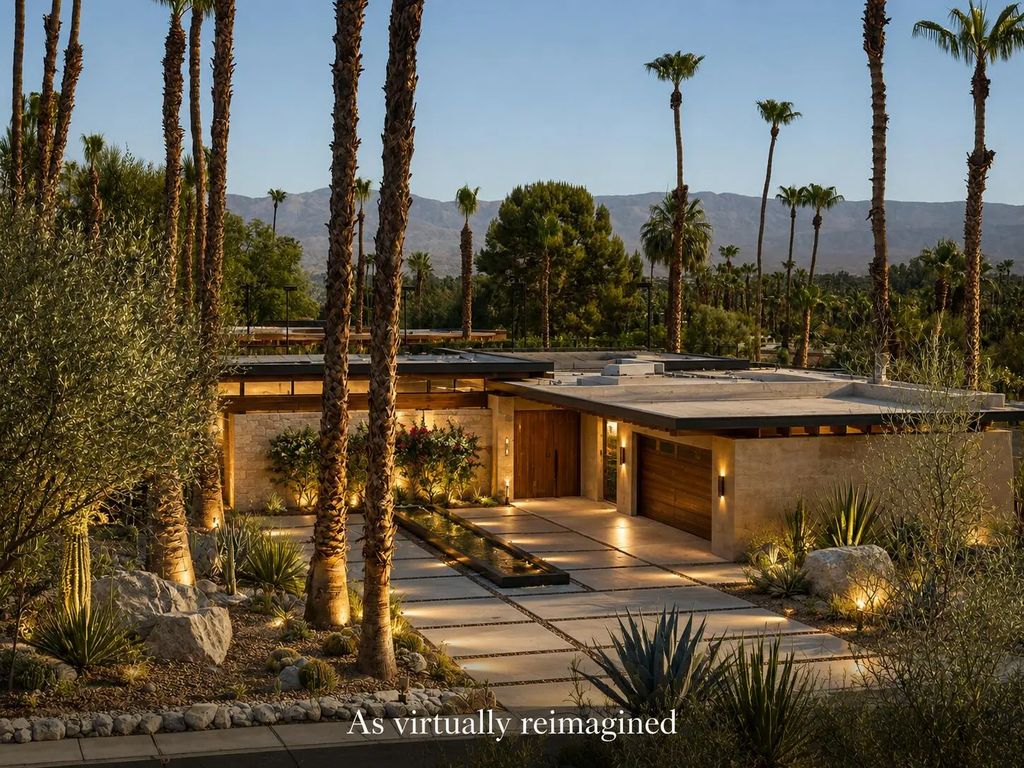
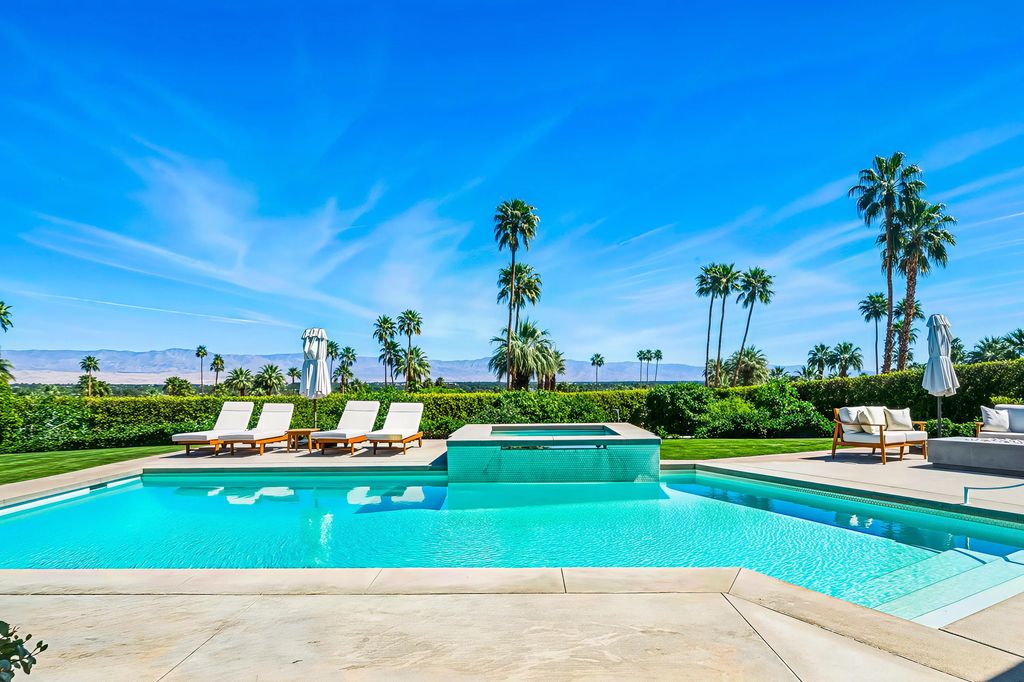


HOA / Neighborhood Breakdown
• Core Thunderbird Country Club: This is the fairway-and-clubhouse lane—classic ranch houses, remodeled mid-century homes, and larger golf-course estates around streets like Country Club, Fairway, Club View, Cypress, and Sand Dune. It is the most direct version of the Thunderbird golf lifestyle.
• Thunderbird Heights: This is the hillside prestige lane. Heights is more privacy-driven, view-driven, and architecture-driven, with a deeper estate feel and some of the strongest celebrity and design pedigree in the broader Thunderbird orbit.
• Thunderbird Cove: A smaller luxury hillside enclave that reads more secluded and later-era than the original club streets. This is where Thunderbird starts leaning harder into custom estate living, mountain drama, and more singular homes.
• Thunderbird North: A very small architecture-first enclave. In local MLS history, North behaves more like a boutique mid-century collection than a broad subdivision, which is part of its appeal.
• Thunderbird Estates: A tiny, high-end fairway pocket with very limited turnover. It carries an unusually private feel and sits closer to the top end of Thunderbird’s pricing and architectural cachet.
• Thunderbird Villas: A more manageable entry into the Thunderbird identity, with attached or paired-home living, hillside positioning, and a lower-maintenance feel than the larger estate lanes.
• Thunderbird Terrace: A separate guard-gated view-home lane in the broader Thunderbird area, more about custom homes, elevation, and privacy than direct fairway repetition.
• Thunderbird Palms and Thunderbird Palms East: These are the smallest and most specialized ownership lanes in the Thunderbird ecosystem. Buyers should underwrite them carefully because the ownership and HOA structure can differ meaningfully from the larger single-family neighborhoods.
Real Estate
Across local MLS history, Thunderbird is detached single-family first. The clean resale history is dominated by 3- and 4-bedroom homes, but the size range is much wider than in a typical country club because Thunderbird mixes original fairway houses, hillside estates, architectural one-offs, and smaller specialty enclaves under one name. Core Thunderbird Country Club tends to live in the classic desert-country-club band—roughly from the high-1,000s into the 7,000+ square foot range—with older 1950s and 1960s bones frequently reworked, expanded, or reinterpreted over time. Thunderbird Heights pushes the estate scale higher and the view story harder. Thunderbird Cove brings later custom homes and larger entertaining compounds. Thunderbird North is smaller in count, but stronger in architectural identity. Thunderbird Estates barely trades by comparison, but when it does, it tends to read as premium fairway real estate. The practical takeaway is that Thunderbird is not a floorplan market. It is a micro-market market. Buyers are comparing view line, privacy, architecture, renovation quality, hillside versus fairway positioning, and proximity to the club more than they are comparing repeating model names.
History
Thunderbird sits near the beginning of the Rancho Mirage story. Frank Bogert opened Thunderbird Ranch as a dude ranch in 1946. Johnny Dawson later identified the site as the right place for the desert’s first 18-hole course, assembled a high-profile investor group, and turned the property into Thunderbird Country Club, which opened in 1951. That mattered far beyond one club. Thunderbird helped establish the valley pattern of tying serious golf, private-club life, and residential real estate together by offering fairway lots to members early in the club’s life. William F. Cody was brought in to remodel the ranch buildings and create early cottages, which helps explain why Thunderbird’s real-estate DNA still feels more architectural and individual than standardized. The club later hosted the 1955 Ryder Cup, early PGA Tour play, and became part of desert lore through the golf-cart story, the Ford Thunderbird connection, and a long association with entertainers, corporate figures, and presidents.
Lifestyle
Thunderbird still feels like a real club community rather than a neighborhood that merely happens to touch a golf course. The social layer matters here. Dining matters here. Racquet sports matter here. Wellness matters here. That makes Thunderbird broader than a golf address. It fits buyers who want historical prestige and club culture, but it also fits households who want a private social environment with enough activity to make the club relevant beyond tee times. The tone is more legacy-driven and understated than amenity-inflated. Thunderbird feels established, storied, and socially rooted.
Golf
Golf at Thunderbird is more about significance than sheer scale. This is a single-course club, but it is one of the most important golf addresses in desert history. It began as the first 18-hole course in the area, hosted the Ryder Cup in 1955, and later saw PGA Tour competition. Today the club still presents the course as a thoughtful, strategic test rather than a historical relic. For real estate, golf is not just scenery. Fairway line, lake placement, mountain framing, privacy from play, and the exact relationship between house and course all materially affect how a Thunderbird property lives.
Membership and Clubhouse
Membership at Thunderbird should be treated as part of the buying conversation, not an afterthought. The club publicly states that membership is by member invitation, so buyers should verify the current process, sponsorship expectations, category options, and timing directly with the club during due diligence. Onsite life centers on the clubhouse on Country Club Drive, with a separate racquets club on Highway 111. Public club materials emphasize dining, social events, tennis, pickleball, wellness programming, spa services, and member-hosted events in addition to golf. In other words, Thunderbird is not only a golf-membership proposition. It is a full private-club proposition.
Location
One of Thunderbird’s quiet strengths is location. The club sits in central Rancho Mirage, and the split between the main clubhouse on Country Club Drive and the racquets club on Highway 111 reinforces how usable the address is in day-to-day desert living. Thunderbird works well for buyers who want historic prestige without feeling buried deep inside a newer mega-club footprint. It has legacy, but it also has practical in-and-out access.
Analogy For Understanding
Buying in Thunderbird Country Club is less like buying into a single subdivision and more like buying into Rancho Mirage’s original private-club operating system. Some communities train buyers to learn floorplans. Thunderbird trains buyers to learn addresses, architects, view corridors, and the social meaning of the club itself. The premium is not only that the address is prestigious. The premium is that Thunderbird helped define the desert formula of golf, architecture, private-club culture, and residential status all reinforcing one another.
FAQ
What kind of community is Thunderbird Country Club?
Thunderbird is best understood as a broader private-club ecosystem in Rancho Mirage anchored by one of the Coachella Valley’s most historically important country clubs. It is not just one uniform subdivision.
Are homes here mostly custom or mostly repeating floorplans?
Mostly custom or semi-custom in feel. Thunderbird is far less about repeating model families than many newer country club communities, and far more about architecture, lot placement, and renovation quality.
What are the main HOA or neighborhood names buyers should know?
The broader Thunderbird umbrella includes Thunderbird Country Club, Thunderbird Heights, Thunderbird Cove, Thunderbird North, Thunderbird Estates, Thunderbird Villas, Thunderbird Terrace, Thunderbird Palms, and Thunderbird Palms East.
Which part of Thunderbird is the most view-driven?
Thunderbird Heights is the clearest answer for hillside prestige and valley views, while Thunderbird Cove also delivers a strong mountain-and-seclusion estate feel. Core Thunderbird Country Club is more about fairway living, golf frontage, and direct club adjacency.
Does buying a home here automatically solve membership?
No. Real estate and membership are connected at Thunderbird, but they are not the same decision. Buyers should verify the exact membership path directly with the club during due diligence.
Is there a lower-maintenance entry point into the Thunderbird name?
Yes, but buyers need precision. Villas and smaller specialty enclaves can create a more manageable entry point, yet those pockets may involve different ownership or HOA mechanics than the larger single-family lanes.
Who is Thunderbird best for?
Thunderbird fits buyers who care about legacy, architectural individuality, private-club culture, and central Rancho Mirage positioning. It is especially strong for people who want substance, history, and design—not just a house on a golf course.